
You've probably come across an ad with dancing hamsters at some point. Dedoles is one of the largest Slovak e-commerce projects. It rose to great heights with incredible year-over-year growth.
However, due to various problems, it then found itself in a difficult financial situation. It had to go through restructuring, and during this period it must fulfil an agreed recovery plan. Today, that means enormous pressure on performance. A shift from spending money on TV advertising to evidence-based performance marketing built on the strict adherence to KPIs.
The Challenge
Dedoles approached us with an offer to manage its performance campaigns in Google Ads and on Meta. It found itself in a situation where:
- It was unable to match last year's revenue
- It was struggling with year-over-year increases in CPC and CPM across platforms
- It was unable to maintain the agreed cost efficiency
It was looking for a partner who would truly go in depth — and wouldn't stop testing and trying until the set goals were met. It chose well.
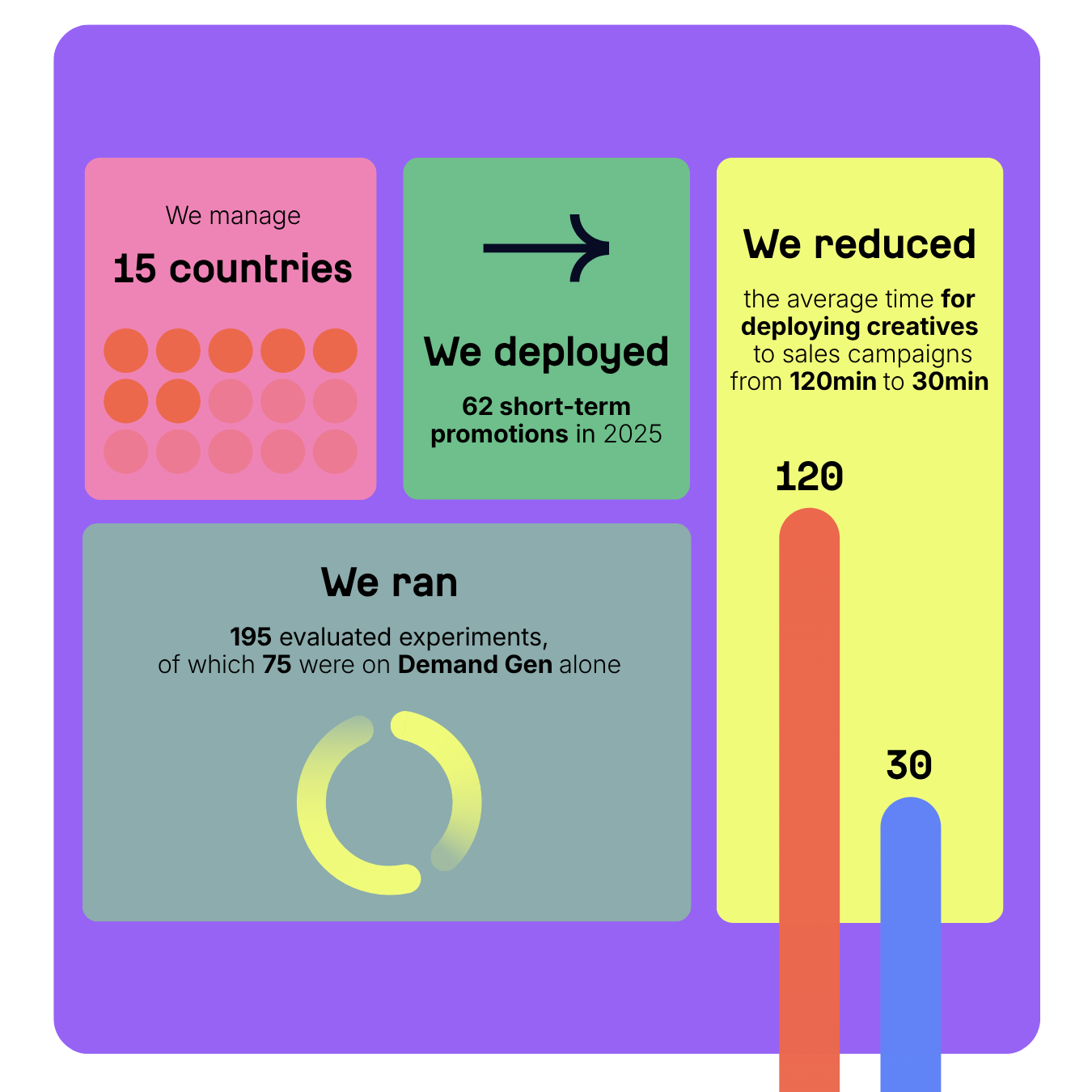
We started with a test in two countries. If we succeeded, we would replace the entire in-house team with an agency across fifteen countries.
We passed the test and the partnership grew. At that point, we already knew this would be one of the greatest challenges of our careers to date.
Even before managing the campaigns, we needed to:
- Smoothly take over all accounts from 15 countries under our management
- Set up communication and processes with the client
- Set up processes for deploying their regular short-term promotions
Only after that did we dive into the accounts.
If you want to read how we approached it on Meta, you can find it here (link). In this article, I will focus on the strategy and numbers from Google Ads.
A Few Numbers to Start With
"Thank you very much. You're doing an excellent job. Today I'm going to a Board meeting. I need to prepare for it and explain to them why things are going so well."
Those were paraphrased words from one of our meetings with Dedoles.
What You Will Learn in This Article
- What tests we ran to find the best campaign setup for Search, Shopping, and Demand Gen
- What we were able to automate
- What results we achieved
Strategy + Tactics
Within Google Ads, Dedoles invested funds primarily in 3 campaign types:
- Search
- Performance Max
- Demand Gen
We needed to make each of these more efficient and restart them.
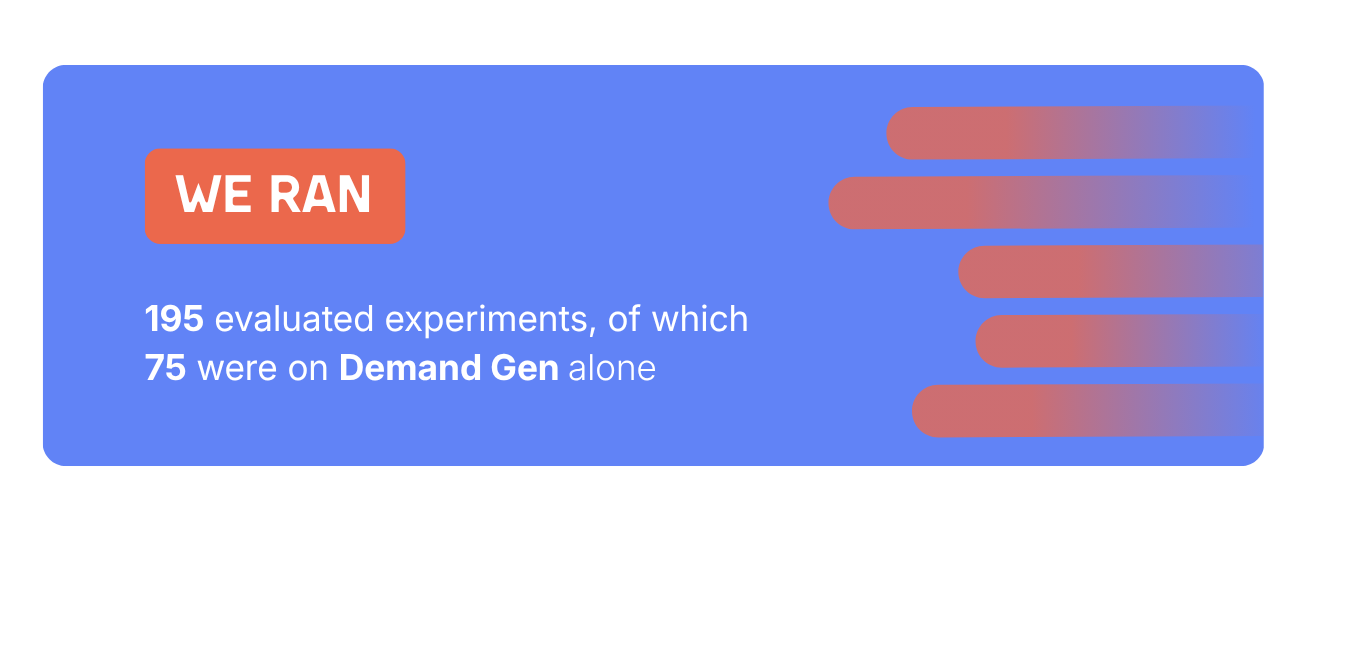
Search
This campaign type is specific for this client in that there are relatively few searched keywords in this category, yet they drive a large number of conversions.
Additionally, there is varying brand awareness across 15 countries. We needed to consider how to approach branded campaigns. By branded keywords I don't just mean the term "dedoles", but also keywords strongly associated with the brand — such as: funny, quirky, or colourful socks, etc.
Beyond brand, we needed to find the right campaign structure in each country, ensure the most effective keyword match types, and the right bidding strategy. Among the selected experiments we ran:
- Separating branded keywords into a standalone campaign
- The impact of CPC levels and search impression share
- Testing the performance of exact match vs. broad match
- Testing the contribution of a DSA campaign within a single search campaign (later during the year we also tested the new AI Max feature)
- Automated bidding strategies (Maximize Conversion Value) vs. Manual CPC
Shopping Campaigns (Performance Max)
Here too we were competing with a small number of searched keywords. Similarly, we needed to set a different strategy for branded keywords.
Here are a few sample tests:
- Separating brand into a standalone PLA vs. a standalone PMax campaign
- PMax vs. PLA
- PMax feed only vs. full assets
- Single campaign vs. segmentation by performance
- Campaign with all products vs. campaign without variants
- PMax without feed with full assets
- Editing product titles in the feed
Demand Gen
The goal here was clear. Dedoles grew on Meta ads. Because the products are visually appealing and also suitable for impulse purchases.
The goal of our work with Demand Gen campaigns was to get closer to Meta's performance and find another way to efficiently acquire new customers.
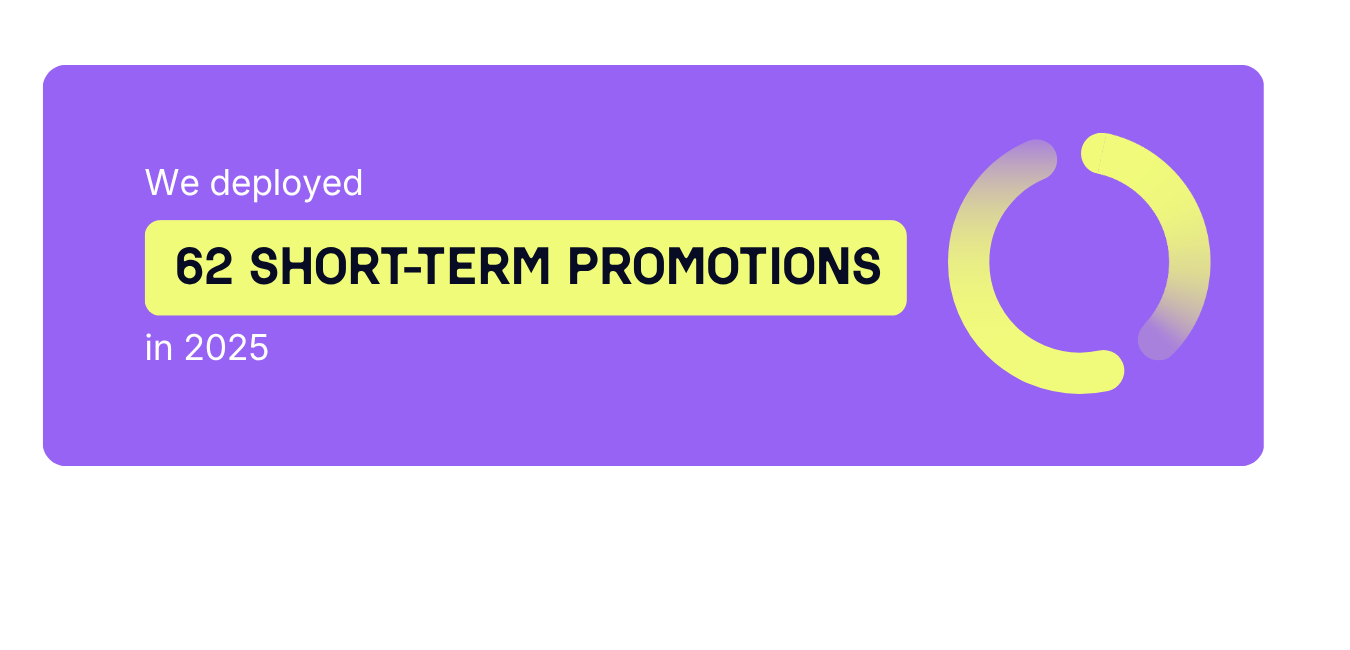
On DG campaigns alone, we tried 75 different experiments over the course of a year. A huge thank you goes to Dedoles for being willing and patient in testing various strategies.
Thanks to this, we learned:
- How to approach campaign structure
- How to approach DG depending on how well the brand is recognised in a given country
- How to promote long-term and short-term promotions
- How to evaluate them and compare them with other platforms

Automation
I mentioned different approaches across 15 countries based on keyword search volume, brand awareness, or the type of current short-term promotion.
The early days were not easy — there was truly a lot of work. It was the ideal opportunity to think about automating routine tasks. That's the part of our work we genuinely enjoy.
What we managed to automate, or semi-automate, within Google Ads:
- Analysis of PMax campaigns through our PMax script
- Analysis of product campaigns, identifying potential and automatic campaign labelling via our Product Performance script
- Simple edits to product titles and images, and evaluation of these experiments via our Product Titles and Images script
- Finding opportunities through detailed search query analysis via our own PMax search terms script
- Suggesting an appropriate budget and ROAS based on previous performance via our own script
- Semi-automated deployment of new creatives for current short-term promotions
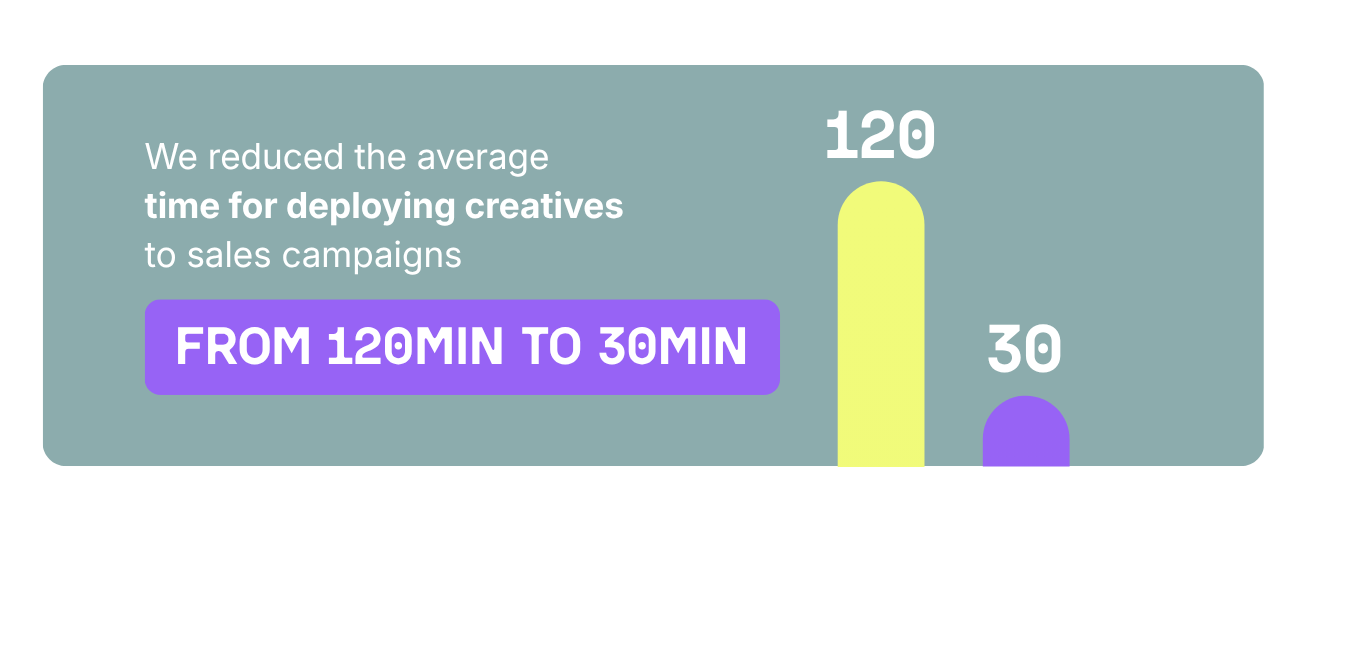
I deliberately saved the deployment of new promotions for last. It's the part of the work that took the most time, and we urgently needed to make it significantly more efficient so we could focus on deeper, more analytical tasks.
Our helpers assisted us here as well:
- A script that sorts creatives from the client by country, format (banner vs. video), dimensions, and the platform where the creative is to be deployed
- A script that scrapes URLs to gather the necessary information about the promotion and runs it through AI to generate headlines and descriptions for ads across all campaign types where we want to deploy the promotion
- A script that uploads videos to the YouTube channel and retrieves the video URLs
- A script that prepares everything needed to create new campaigns and ad groups in a Google Sheet, so we can simply copy it into Google Ads Editor, review it there, and upload it to the account

Results
To meet the goals, we decided on the following approach:
- Eliminate inefficient campaigns
- Reduce the average cost per click
- Scale campaigns that were working
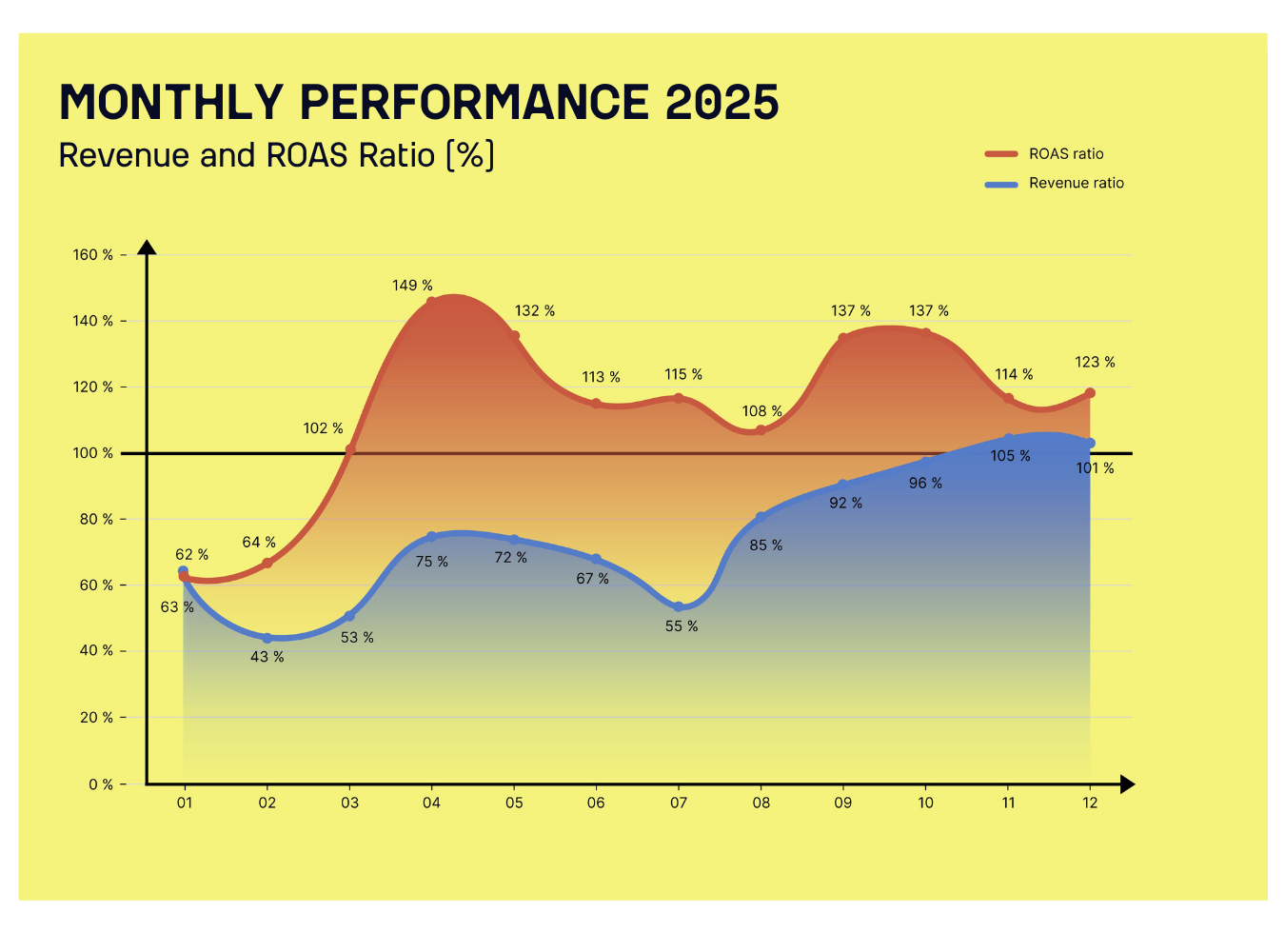
The graphs below show a percentage comparison of selected metrics against the previous year, broken down by month. All data comes from Google Ads.
Let's first look at the first two goals and compare costs and cost per click with the previous year:
- In the first 3 months, we managed to reduce inefficient costs, but the cost per click was still high
- From month 4 practically through to Black Friday, we managed to keep the cost per click lower than last year while also scaling the campaigns that were working
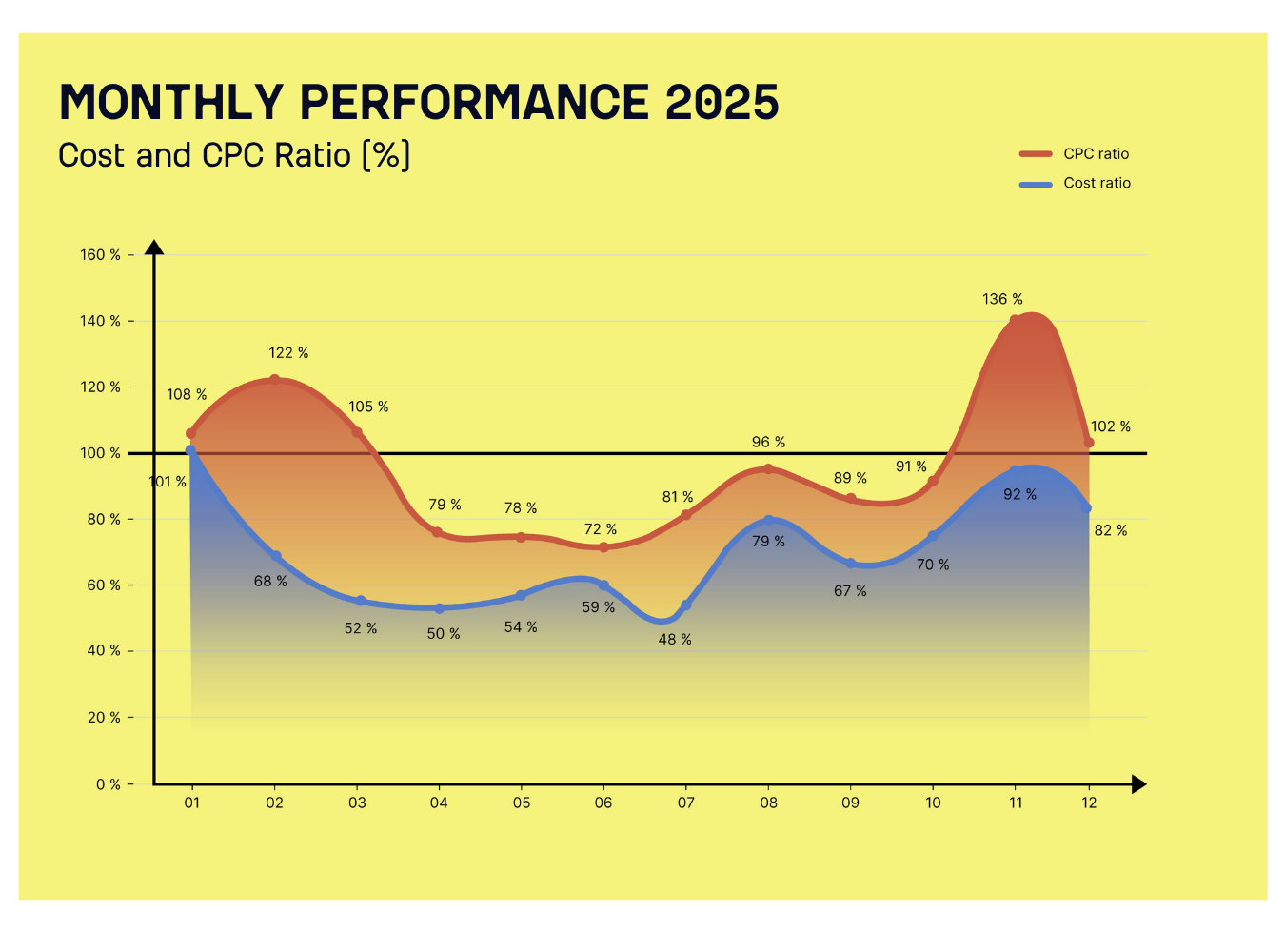
However, we were still spending less money in campaigns than the previous year. Let's therefore look at more important metrics such as Revenue and ROAS (campaign cost efficiency):
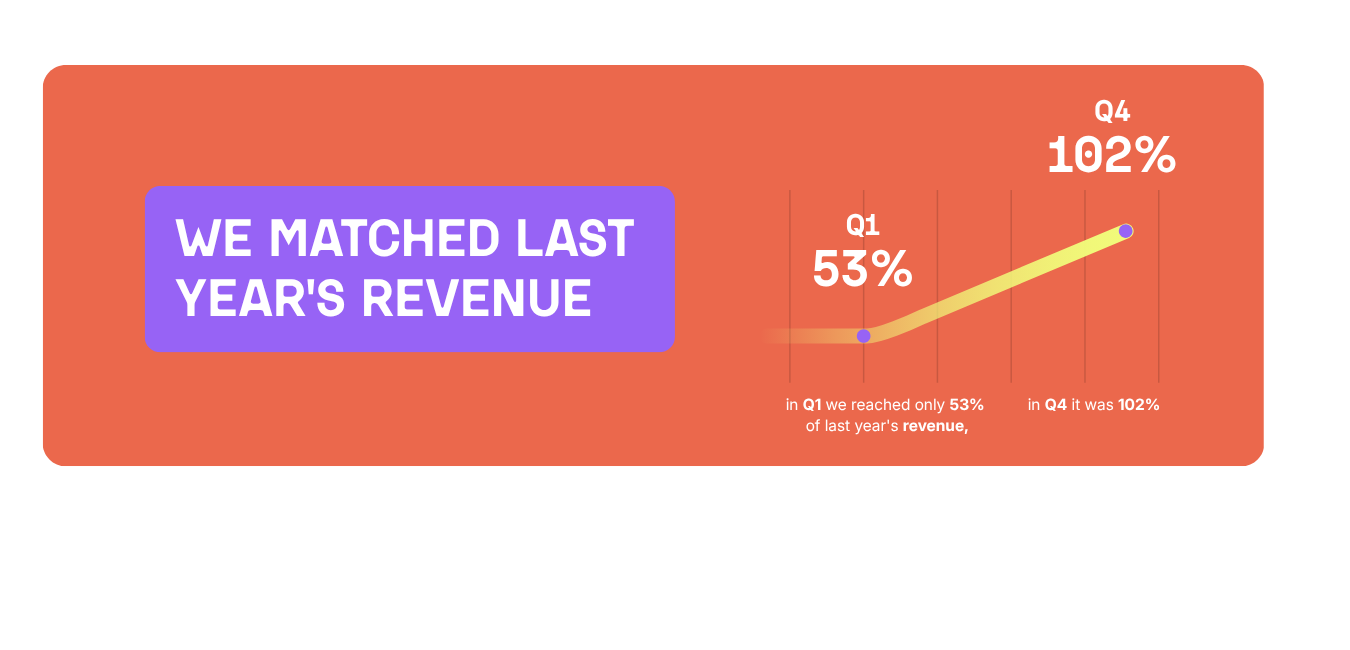
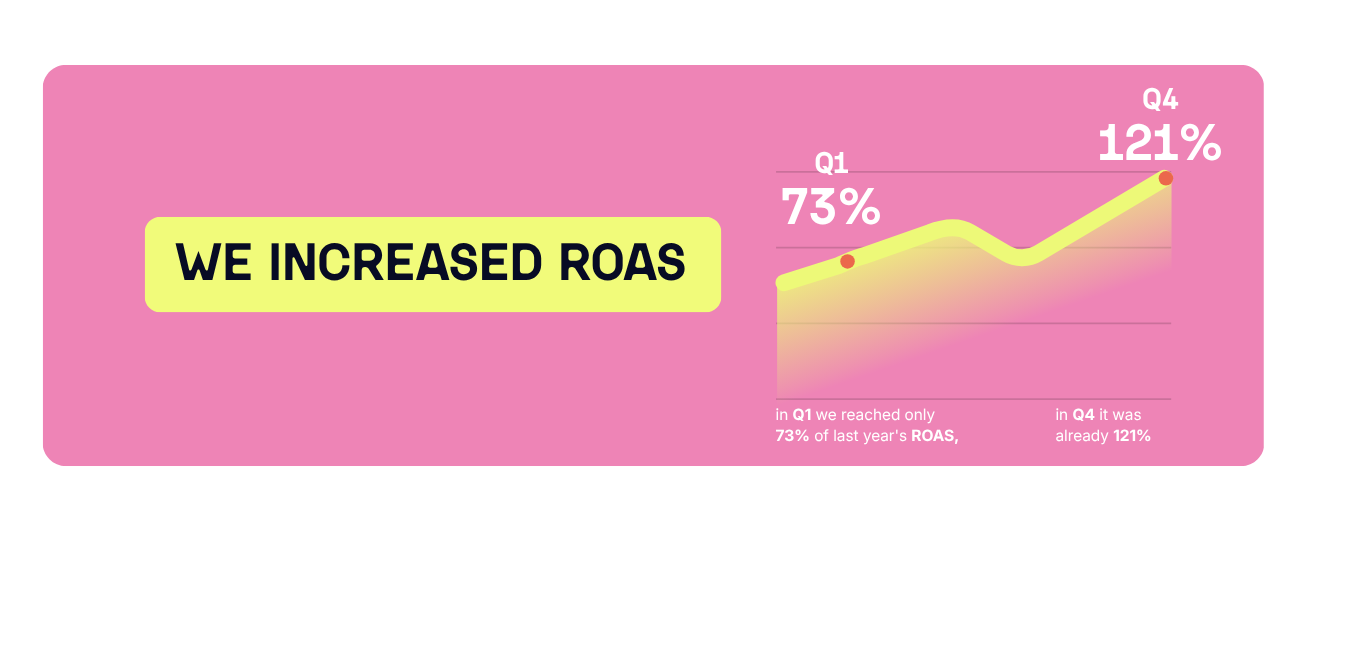
- The first 3 months were truly about finding the right solutions. Costs were being suppressed and the cost per click wasn't dropping. Logically, this had a negative impact on the year-over-year comparison of both Revenue and ROAS. We were failing to match last year's revenue.
- From the third month, however, our cost efficiency began to improve more noticeably. In terms of revenue, we were gradually able to get closer and closer to last year's figures month by month, until we slightly surpassed them thanks to Black Friday.
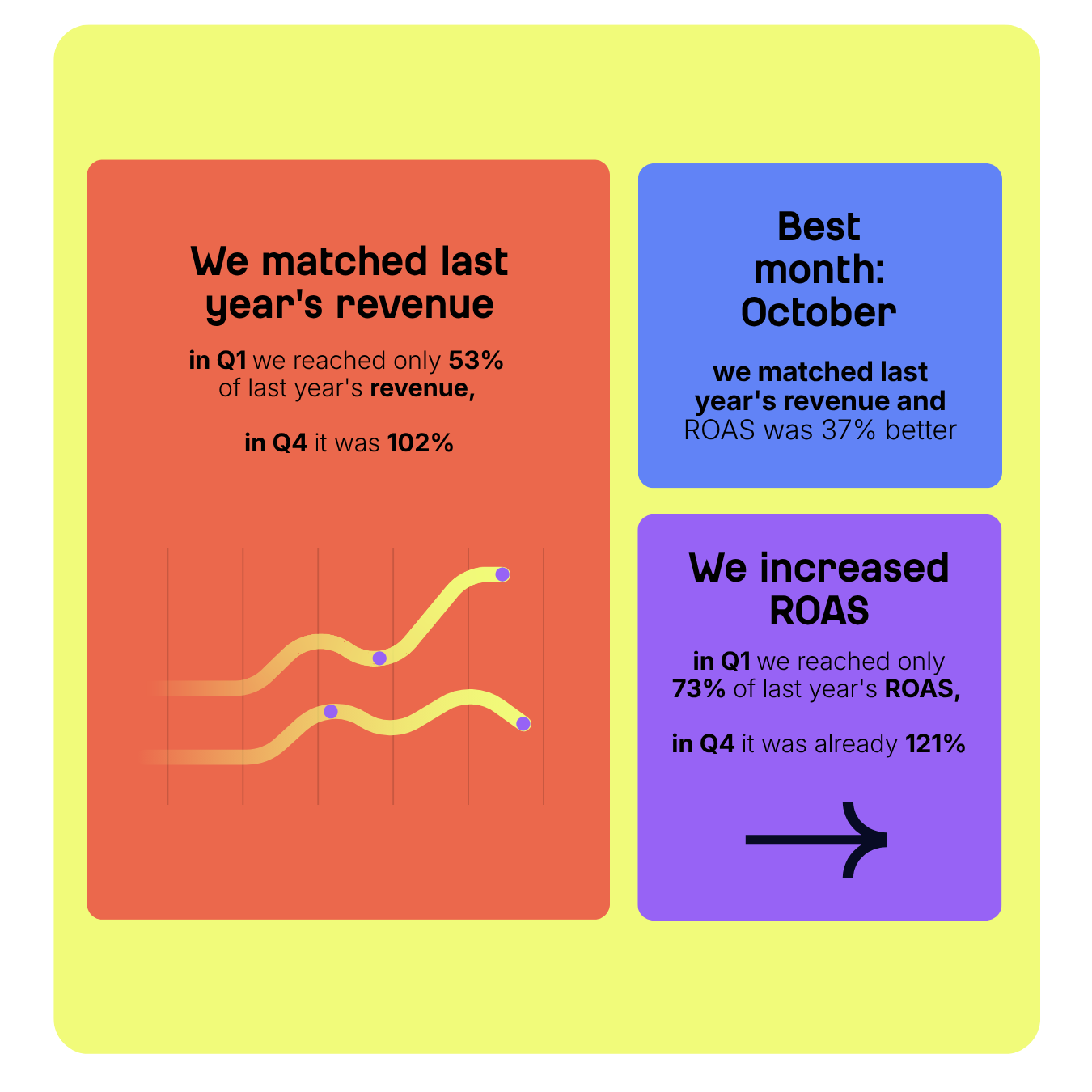
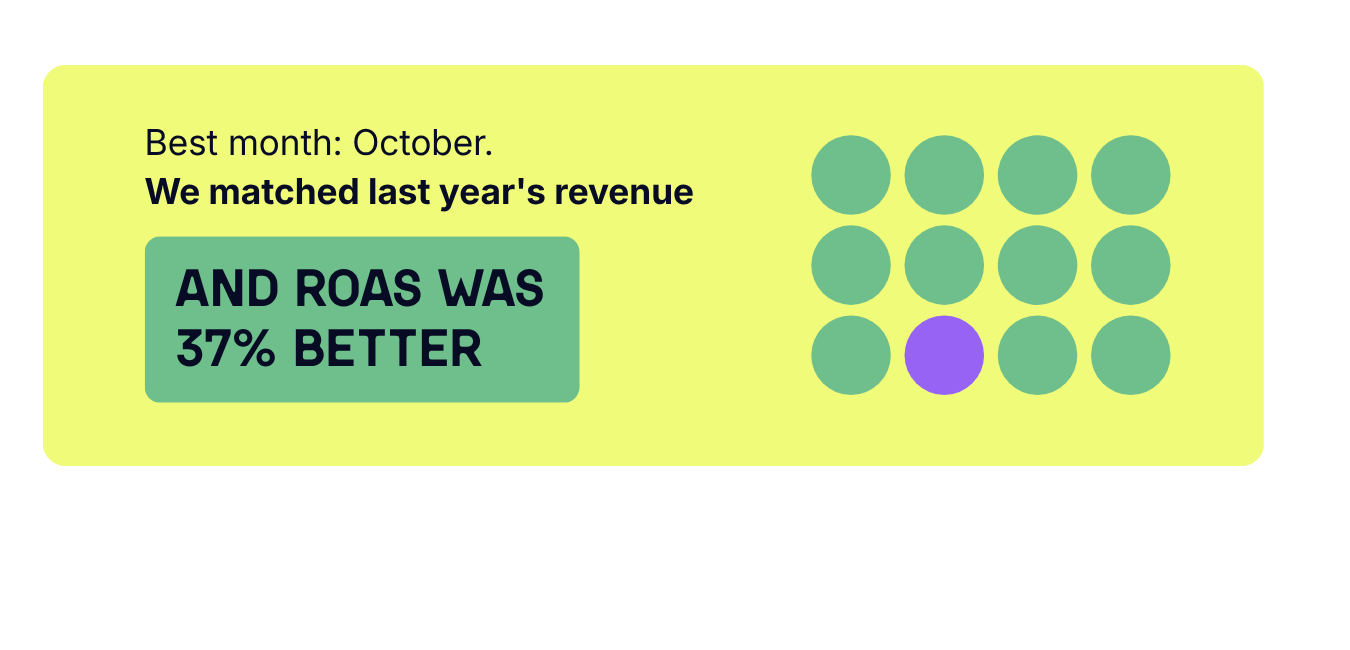
- Most importantly, the key was to scale performance at better cost efficiency than last year. And in this area too, we saw a significant improvement from month 4 onwards. In our best months, we had a ROAS up to 37% better than the previous year.

Conclusion
Testing is the fundamental ingredient for successfully achieving goals. Some experiments delivered more, some less, and some were unsuccessful. But that is their very nature — so that we can learn from them.
Overall, however, these experiments contributed to us achieving the following KPIs:
- Matched last year's revenue → In Q1 2025 our revenue was 53% compared to the previous year. By Q4 it was 102%
- Increased ROAS → In Q1 2025 ROAS was 73% compared to the previous year. By Q4 it was 121%
- In our best month, October, we matched last year's revenue and ROAS was 37% better